
Track #47 - “Watching the Wheels” by John Lennon (1980)
Performed by:
John Lennon – lead vocals
Earl Slick – lead guitar
Hugh McCracken – lead guitar
Tony Levin – bass
George Small – keyboards
Andy Newmark – drums
Matthew Cunningham – hammer dulcimer
Arthur Jenkins – percussion
Michelle Simpson, Cassandra Wooten, Cheryl Manson Jacks, Eric Troyer – background vocals
US Billboard Hot 100 - #10; Billboard Year-End Hot 100 - #86
People say I’m crazy
Doing what I’m doing
Well, they give me all kinds of warnings
To save me from ruin
When I say that I’m OK, well they look at me kinda strange
“Surely you’re not happy now, you no longer play the game”
People say I’m lazy
Dreaming my life away
Well, they give me all kinds of advice
Designed to enlighten me
When I tell them that I’m doing fine watching shadows on the wall
“Don’t you miss the big time boy, you’re no longer on the ball?”
When I first began this project four years ago, before I wrote about one song, I made some call outs. They mostly alluded to there being no country music on the 50 At 50 playlist, how I chose the songs, and how this wasn’t a critics list of the best songs of the past fifty years. I also mentioned right off the bat the absence of maybe the most iconic and influential band ever that did not have a song on the list: The Beatles. In fact, I called it the 400-pound gorilla in the room. We’ve reached the point, at Track #47, to address the 400-pound gorilla. As more people have learned about the blog and they’ve gone back to look at songs they missed, they will invariably ask me, “No Beatles? No Led Zeppelin?? How do you not have songs from those two bands?!” I never thought to call out the absence of Led Zeppelin, so while I’m addressing the Beatles gorilla, we may as well talk about the Led Zeppelin gorilla. As I also referenced in that first entry, the Beatles would barely qualify for the list, as any songs appearing need to be released from 1970 forward. The Beatles released their final studio album, Let It Be, in May of 1970, and since it was released before I was even born that August, it really does not qualify. But if I wanted to include “Get Back” or the title track, two perfectly iconic Beatles songs, I would have bent my own rule…but I did not. Fun fact: The Beatles achieved all their greatness from 1963 to 1970, a total of eight years, during which they sold 500 million albums and scored twenty #1 singles on the Billboard Hot 100. When they disbanded, they ranged in age from 27 to 30. It’s just incredible when you think about it in that way, that they changed the world and how we listen to popular music forever, in just eight years. Anyway…The Beatles and Led Zeppelin are so ubiquitous and their influence so acute that it’s just not fair to choose one song. Reputable publications have tried to rank the Led Zeppelin and Beatles catalogs for decades to no avail; it always sparks debate and leaves most people unsatisfied. But that’s not the reason I did not choose songs from either band. Just like the rest of the list, the song had to stand out somehow, frame an incident or a memory, or remind me of a person or a moment. The Beatles and Led Zeppelin are way bigger than that; they are the canvas upon which other songs are painted on. They reside in your subconscious, permanently stacked in your internal jukebox, forming the foundation of all your musical memories. And when you actually put on one of their records, or stream one of their songs, it’s like you’re hanging out with an old friend. Whether it’s been five days or five years since you’ve seen each other, you just fall back into the groove of your friendship. That is what The Beatles and Led Zeppelin have meant to me all these years; they’re old friends. So, let’s talk about Zeppelin for a few minutes. I actually didn’t become a real fan of Led Zeppelin until I was in college. Of course, I knew who they were and had heard some of their music, albeit whatever I heard on the radio. There were still enough Led Zeppelin T-shirts being worn by my generation in high school and enough of their posters hanging in Spencer’s at the mall to have them somewhat at the forefront of popular music in the 1980s. They were and still are a staple of FM classic rock radio. But I had no idea of the story their discography told, because to truly appreciate Led Zeppelin, one must listen to the albums and not just the popular singles. The only Led Zeppelin album I knew anything about is their fourth, usually known as Led Zeppelin IV, however it is officially an untitled record. That’s the one with “Rock and Roll”, “Black Dog” and their tour-de-force, “Stairway to Heaven”. I feel like I’m insulting you, do I even need to tell you this?? Anyway…when I began to work in the mall in 1988 and I met Martin (who managed the store I worked at, and who we talked about way back at Track #11), he began to educate me on the Led Zeppelin songs we heard all day on Long Island’s WBAB and what albums they were from. When I told him I had never listened to a Zeppelin album in its entirety he looked at me kind of funny and told me in so many words to correct that problem, so I bought IV, and things sort of blossomed from there. I went all the way back to their first album, listening to them in succession, having “Aha” moments from recognizing certain songs from the radio. But it wasn’t until I got to their 1975 double album Physical Graffiti that it all crystallized. Often considered their masterpiece and the pinnacle of their catalog, it was a transformative experience when I first heard it. It was heavy and moody and melodic and surreal at the same time. But this was the record where it all hit me: all that hard rock and metal I listened to in high school was all born right here. Every rock band who has ever swaggered onto a stage has tried to emulate and somehow capture the magic of Led Zeppelin. Has there been a guitarist in the last 60 years who hasn’t been influenced by Jimmy Page? A drummer who hasn’t picked up sticks and tried to play like John Bonham? A singer who hasn’t tried to shake his hips and wail like Robert Plant? That’s what I mean by Led Zeppelin and The Beatles being the canvas, how they’re old friends. How can I pick one Led Zeppelin song when the story of me and Led Zeppelin is all the songs? So, that, my friends, is why there are no Led Zeppelin songs on my playlist. In case you’re wondering, here are my Top 5 Led Zeppelin songs:
1. Fool in the Rain
2. Over the Hills and Far Away
3. Heartbreaker/Living Loving Maid (this is one song, don’t get me started)
4. Ten Years Gone
5. Good Times Bad Times
And as for The Beatles? It’s a bit more complicated and my memories of how I found The Beatles are shadowy, but it all started with a cartoon.
The Beatles ran as an animated series on ABC from 1965 to 1967 in the hallowed Saturday morning cartoon block, which we talked about in detail for “Rapper’s Delight” back at Track #33. There were 39 episodes over three seasons. Obviously, it aired before I was born, but I saw it in syndication probably when I was about four years old. I can remember my mother asking me if I wanted to “watch The Beatles cartoon” and then sitting on the floor to watch The Fab Four get into all kinds of shenanigans. There they were, animated versions of John, Paul, George and Ringo, with their mop top haircuts, mod suits and pointy shoes, wearing perpetual grins and giving each other eyerolls while they walked the audience through interpretations of their songs. They even did sing-alongs at the end of the show. Ringo was often the butt of the episode’s jokes. I loved it. And this was where I heard my first Beatles songs. I vividly remember caricatures of the most popular band in the universe yucking their way through “Penny Lane”, “Eight Days a Week” and “Day Tripper”. But at this point, of course I had no idea that The Beatles were the most iconic rock band that ever lived and that they had broken up only four years prior to me discovering their animated avatars on network TV. All I knew was I liked watching these four goofy Brits getting into cartoon mischief and then playing music. So, I knew who The Beatles were, but not what they were. By the time I was five and had the plastic JC Penny turntable and Elton John’s Captain Fantastic album, I was starting to poke around in my family’s record collection. I mentioned the beaten copy of The Beatles’ Magical Mystery Tour and Rubber Soul I found at my grandparents’ apartment; this is also where I found the “Lucy in the Sky with Diamonds” 45 single, the Beatles’ cover performed by Elton John. My parents had a copy of Revolver and Sgt. Pepper’s Lonely Hearts Club Band, but if I’m honest here, I don’t think they played either of those records. What they did play a lot was All Things Must Pass, George Harrison’s first proper solo album after The Beatles' break-up. I remember entire Saturday afternoons listening to that record; it was a triple album and is still the most commercially successful album by an ex-Beatle. It’s amazing and you should listen to it when you can. And if you were anywhere near a radio in the 1970’s, it was impossible not to hear any music by Paul McCartney and his band Wings. Wings released seven studio albums until McCartney disbanded the group in 1979, and they produced a slew of hits that are still played on classic rock radio: “Maybe I’m Amazed” ,“Jet”, “Listen to What the Man Said”, “Silly Love Songs”, “Let ‘Em In”, “With a Little Luck”, and one of my favorite songs ever, “Band on the Run”. He was also nominated for an Oscar for the James Bond theme “Live and Let Die” in 1973. In a word, Paul McCartney was busy. So, let’s recap. I was more familiar with the music of The Beatles as individuals than I was with the music of The Beatles. I knew George Harrison from hearing his solo album so much; I knew Paul McCartney because it was literally hard not to; and I knew Ringo Starr because he was the shorter, goofier Beatle from the cartoons (plus, how do you forget a name like “Ringo Starr”?) So…we’re missing a Beatle, aren’t we? During those formative years from 1976 until 1980 when I was discovering music, figuring out what I liked, acquiring a record player and my own records, the missing Beatle, John Lennon, was taking a break from music to be with his new family and devote all of his time to his newborn son, Sean, born in October of 1975. Re-energized after the five-year break, he and wife Yoko Ono emerged with a new album in November 1980. And then on the night of December 8th, the unthinkable. On the morning of December 9th, I awoke and walked into a somber kitchen where my mom was packing our lunches for school. The aroma of maple brown sugar oatmeal hung in the air, and the bare tree branches were rattling outside the window. I knew something wasn’t right. My mother looked sad; the song “(Just Like) Starting Over” was playing on the radio. I asked my mother what was wrong and she said, “Someone shot and killed John Lennon last night.”
So, I thought for a minute, wondering if I should be sad, thinking about what my mother had just said, this news that someone had died so tragically. I could tell my mother was upset, but I didn’t know how to react or how to console her, or even if I should. So, I said the first thing that popped into my head:
“Who’s John Lennon?”
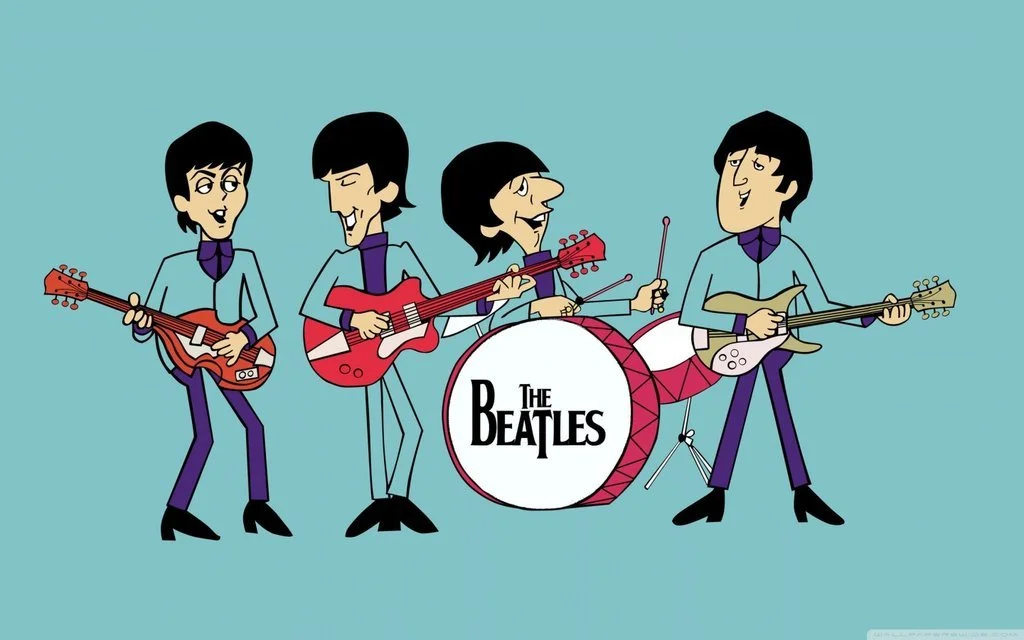
There have been volumes written about why and how The Beatles broke up, so I will not try to re-create it here. Rolling Stone published a dense article in 2009, and Ken McNab wrote an excellent book, And In the End: The Last Days of the Beatles, that chronicles the final year of the Beatles’ existence. You might need a finance or law degree to understand the business dealings and complex contract negotiations that led to the band’s infighting, but both are worth a look if you want to take a deeper dive. To sum it all up (sort of), the Beatles were vulnerable after the death of their longtime manager Brian Epstein in 1967, were kept in the dark about the financial position of their holding company, Apple Corporation, and could not agree on who should manage them or how they should be managed. The popular opinion is that John Lennon’s romantic partner and later wife, Yoko Ono, broke them up by being present at recording sessions, or unscrupulous manager Allen Klein’s meddling caused it, but according to people close to the band, there was no way one individual was going to shatter the partnership of four strong and individual personalities; it was much more complicated than that. By the time the final Beatles album Let It Be was released in May of 1970, the Beatles were no longer a band. Lennon had departed in January, leaving the three remaining members to complete the final two tracks and release the album. Before the end of that year, Lennon, McCartney and Harrison would release their first solo works. The Beatles were officially over.
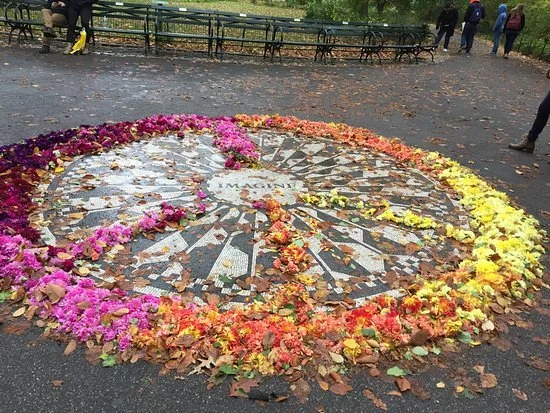
John Lennon put out his first solo record with Yoko Ono, John Lennon/Plastic Ono Band, in December of 1970. It was a critical success, but it was not the commercial success Lennon was hoping for. Looking to achieve a more radio-friendly sound led to the writing and recording of 1971’s Imagine, which includes the iconic anti-war title track, a song that has almost come to define Lennon and is one of the most acclaimed songs of all time. Lennon and Ono released their holiday single “Happy Xmas (War is Over)" that December, and two years later in 1973, Lennon went on his so-called “lost weekend” and separated from Ono for 18 months, promptly getting into mischief and debauchery on the west and east coasts. When he finally settled back down in New York City in 1974, Lennon released Walls and Bridges, which featured the #1 single “Whatever Gets You Thru the Night”, the only solo #1 Billboard single Lennon had in his lifetime. Elton John, who provided piano and background vocals on the track, bet Lennon the song would reach #1, and had Lennon promise to appear onstage with him if it did. Elton won the bet, so on November 28th, Lennon dutifully appeared onstage with him at Madison Square Garden to perform their #1 collaboration, as well as “Lucy in the Sky with Diamonds” and “I Saw Her Standing There”. The performance would prove to be Lennon’s final major concert appearance. Lennon also played guitar and sang background vocals on Elton John’s #1 cover of “Lucy in the Sky with Diamonds” in 1975. Lennon and Ono would reunite in early 1975, and after the release of an album of all cover songs, Rock ‘N’ Roll, Lennon went into a self-imposed exile from the music industry. Well, an unofficial exile anyway. By that October, Lennon and Ono’s son Sean arrived, on Lennon’s 35th birthday. Lennon’s decision to take a hiatus from music was unofficial, but he addressed it in 1977, stating that he and Ono would be devoting themselves to their life at home “until we feel we can take time off to indulge ourselves in creating things outside the family.” And that is exactly what Lennon did until the fall of 1980, when he emerged with his first new song in five years, “(Just Like) Starting Over”. A new album followed in November, Double Fantasy, with Lennon and Ono each performing their own songs. The album sparked a bidding war, with fledgling label Geffen Records winning the right to distribute Double Fantasy. Upon release in November of 1980, the album received negative reviews and was labeled “self-indulgent”. Sales were slow, even in Lennon’s native UK, where the album peaked at #14 then slipped to #46. That all changed on December 9th, 1980.
Back on Long Island, our family was about to spend our first Christmas in the suburbs. What I remember most about that time was how quickly our lives had changed just ten months after moving from Brooklyn. My brother and I had just started our first full academic year at our new school that September; I was playing hockey in a local church league and Jamie was playing organized soccer. Playing organized sports was something we never even thought about while we played wiffle ball and football in the street outside our apartment in Brooklyn. My dad was commuting every day to New York City, two hours each way on the Long Island Railroad, which was diesel back then. At least there was a bar car to offset the misery; not sure if he was taking advantage. And my mom was driving us everywhere and managing the household, getting us off to school in the mornings and sending us down the block to the school bus stop instead of walking us like she did in Brooklyn. My grandparents lived downstairs in their own apartment, so I saw them every single day. But it was the little things that were different that I remember most…not wearing a uniform to school and getting to wear sneakers every day; a backyard bigger than a postage stamp; riding my bike on our dead-end street and not worrying about cars; the cable TV box on top of the television set; having to drive everywhere and not walking to the grocery store; a garage to store my bike. I owned sports equipment for the first time, and I had a bedroom with door and a real closet. And things just felt different. The air seemed crisper; there was more space. But it was the earthy, sweet aroma of our next-door neighbor’s wood burning stove that I can still recall most vividly. Living in Brooklyn for the first nine years of my life had deprived me of that wonderful smell, and that first full winter on Long Island was the first time I had ever experienced it. To this day, if there’s an outdoor woodburning fire going somewhere, you will usually find me right in front of it, wafting the smell of the burning wood and ash and feeling the warmth of the fire. It takes me right back to that time in 1980: our new house, our first full winter, our first Christmas. It also takes me right back to the morning after John Lennon’s murder, December 9th, 1980. The first thing I noticed when I left for school that morning was the scent of kindling in the air, probably coming from our neighbor’s chimney.

When my mom told me John Lennon had been shot, and I asked her who John Lennon was, she replied without missing a beat:
“He was in The Beatles, Johnny. He was the one with the round glasses.”
I thought about this and tried to picture him, this man who was in The Beatles, the most popular band of all time, who was now dead and I remember feeling sad because I just couldn’t conjure up a face to go with the name. I thought about John Lennon all day at school. I knew who The Beatles were; I knew Paul and Ringo, and my parents had that record by George Harrison that they played a lot, and I knew Beatles songs: “I Wanna Hold Your Hand”, “Strawberry Fields”, “Let It Be”, “Yesterday”. I knew them from the radio, but I still could not get an image of John Lennon in my head. But when I got home from school that day, it was all over the news. People were camping out in front of The Dakota, the upper west side apartment building where Lennon was shot and where he lived with Yoko Ono and his son Sean. There were images and video of the man who shot him, Mark David Chapman, and reports of the actual incident the night before. And there were photos of Lennon all over the news: with The Beatles, by himself, with his wife and son…all of it was as terrible as you can imagine it. When I saw the old photos on the news of John Lennon it all slowly came together. I recognized him from the few album covers I had seen; I just never knew his name. The next day, Wednesday, I came home from school, and I heard music playing as I climbed the stairs. My mom had purchased Double Fantasy that day and had probably been listening all day. Side 1 was coming to an end, and she flipped the record to play Side 2, and I decided to park myself on the sofa and listen. When Side 2 began, the first thing I heard was a very calming and uplifting piano accompanied by a simple arrangement. When Lennon begins to sing, his voice is very reassuring, poignant and honest. It sounds like a confessional. In fact, I would barely call it singing. It sounds like he’s talking to a friend. He tells us that he’s “…doing fine watching shadows on the wall…”, and he’s “…Just sitting here watching the wheels go round and round…I really love to watch them roll.” I continued to listen, and these words that John Lennon was saying began to hit me: it sounded like he was singing about daydreaming, and about not caring what people thought about it. Of course, he was not; he was singing about leaving the music business to be with his family and people giving him a hard time about it. I would realize this many years later. But that December day, when I was 10 years old, it sounded to me like John Lennon was telling me it was OK to daydream. When I was in third grade, and still in Catholic school in Brooklyn, sometimes I would finish my work before the rest of the class, so I started to bring stuff to school to occupy myself. Do you know how many Highlights magazines, Weekly Readers and books were confiscated from me? Too many to count. I was just looking for a way to use my brain when I was finished with my schoolwork. Finally, when I started staring out the window at the trees, the birds and the church steeple across the street, writing down what I saw in my marble composition book, the teacher barked, “Mr. Serino, you need to focus and stop daydreaming!!” Focus on what!? I’m finished!! So, my mother was called to the school, and we sat with my teacher, and my teacher explained that I wasn’t focusing. My mother asked my teacher if I was being disruptive or not finishing my schoolwork, and when my mother realized that the only thing I was guilty of was staring out the window and using my imagination, she grabbed me by the hand and marched me out of there. I honestly think she wanted to tell my teacher to go f*** herself. From that day on, I just paced myself and tried not to finish assignments too quickly…but I still stole glances out the window when my teacher wasn’t looking. As I listened to “Watching the Wheels”, all I heard was an adult saying it was OK to dream a little, and to look up once in a while and let your thoughts run away as you stared at those wheels going around. Many years later, I would understand why John Lennon wrote that song, and what it really meant. He took those five years off to be with his family and to get back some of years he lost, I think. Being in The Beatles, being in the most popular band in the world, and then the expectations placed on him as a solo musician had taken a toll and he just wanted to be home. He didn’t want to miss a minute of his son’s life. He knew exactly what was important to him at that time. He wasn’t saying he was never going to make music again; he just wanted some time to himself, and he was fine with not being in the spotlight anymore. And when he re-emerged, energized and ready to make music again, it was all taken away from him. The tragedy of it all has stayed with me all these years later and as I’ve gotten older I understand it less and less, how fate or karma or whatever you believe in allowed John Lennon to cross paths with a murderer just weeks after he brought new music to the world, and when his son was just five years old. At least he had figured things out, for a time, anyway. “Watching the Wheels” is the proof that he had everything he needed. Of course, “Watching the Wheels” and the rest of the music from Double Fantasy has changed for me over the years, but hearing the songs now takes me right back to that December in 1980. And if I catch the scent of wood burning, forget it; the chords of “Watching the Wheels” or “Starting Over” fill my head. I still daydream, but not as much as I used to. I still stare out the window, looking for inspiration; I have to, in fact. Taking a pause and letting my own wheels turn is the only way I can get these thoughts down on paper and talk about these songs that I love. And I owe at least some of that imagination to the Beatle I knew the least about.
Thanks again for reading! Please sign up for email updates to get new posts delivered to your inbox and if you’re enjoying the posts, please feel free to share the link with your friends! Three. More. Songs. To go!
There is no official video for “Watching the Wheels”, just lyric only videos and a remix with John Lennon in profile. So, I encourage you to listen to the song and just gaze out the window. 😊
Next time…my dad and I share a moment with a quartet from Virginia and their monster 1986 hit.
P.S.
On December 9th, 1980, Yoko Ono issued a statement: “There is no funeral for John…John loved and prayed for the human race. Please pray the same for him.” Five days later, on December 14th, millions of people around the world observed 10 minutes of silence, including 200,000 plus who gathered in Central Park across the street from where the shooting took place. New York City designated an area of Central Park to be “Strawberry Fields” in 1985, with countries from all over the world donating trees. And each year on December 8th there are memorials and remembrance ceremonies everywhere; I won’t list them all here, but it’s all a testament to the creative spirit, love, and wish for peace that Lennon brought to the world. It also speaks to the power that artists have to bring change and speak what’s really on everyone’s minds. Leaders and politicians often stop short when expressing themselves, for either personal gain or to protect their self-interests. Artists do not, and should not, ever stop short. No other musician’s death, apart from Kurt Cobain, begs the question “What if?” as often as it has with John Lennon. For my generation, these are the two tragic and untimely deaths that will always have us pondering what might have been had they lived another twenty or thirty years. Lennon was only 40 at the time of his death and had decades of music ahead of him. Would he and the original Beatles reunited had he lived? And perhaps more important, what kind of voice would he have been in the 1980s, a decade dominated by greed and the Cold War? Richard Nixon tried to have Lennon deported several times in the 1970s, worried that Lennon’s anti-war rhetoric would cost him re-election. Nixon was unsuccessful, and Lennon was issued a green card in 1976, but the FBI still kept tabs on him and had a file a few inches thick with documentation of Lennon’s anti-war activities. You can watch the documentary The US vs John Lennon on YouTube to see more of historian Jon Wiener’s fight to get Lennon’s FBI file released to the public. The point is Lennon had a voice and certain people were afraid of what he would stir up. Yes, he was a brilliant songwriter and musician, but he also had the ear of a generation; what could that have meant for future generations?
Double Fantasy would end up selling 3 million copies in the US. Sales were sluggish and reviews were very mixed upon the album’s release, but after Lennon’s murder, the album shot to #1 in the US and spent eight weeks there; it was the UK’s #1 album for two weeks. It was awarded the Grammy for Album of the Year the following February. It was re-issued in 2000 with bonus tracks and then Stripped Down was released in 2010 featuring the songs from Double Fantasy with the simpler, original arrangements. The album has generally aged well and been included of several “Best Of” lists of the 1980s. I cannot honestly remember the last time I listened to it before streaming it to prepare for this post. Upon hearing it, the initial feelings I had for John Lennon’s songs were immediately present: the melancholy, the grey of that first winter on Long Island, and of course, the fleeting whiff of a woodburning stove, conjured from my memories, all returned. “Watching the Wheels” overwhelmed me and still does. The Yoko Ono songs, considered more adventurous and creative when first released, do not hold the same weight for me, but I realize the musical collaboration Lennon and Ono had went beyond the songs; there was something spiritual there. I think it’s just beyond my grasp though.
As you probably know, there are two surviving Beatles: Paul McCartney and Ringo Starr. Both men appear ageless and still make music and tour. George Harrison died in November of 2001 of lung cancer, and any chance of a meaningful reunion of the surviving Beatles died with him. They did collaborate on various projects through the years, including George Harrison’s 1981 hit “All Those Years Ago”; Ringo played drums, and Paul sang backup. George, Ringo and Paul also got together in 1990 to complete two Lennon demos, “Free as a Bird” and “Real Love”, but there was never anything official. Again, we have to ask, “What if?”
Much like Led Zeppelin, the story of The Beatles is better told with their complete albums than with their singles. Despite their mind-boggling Billboard chart success and all of those #1 singles, each album is sacred and tells the story of that particular chapter of The Beatles. There are reams written about every single Beatles album, but don’t read reviews; pick one and just listen. Granted, the later ones are far more interesting, but there’s so much evolution in their sound and songwriting to pick through that you really can’t go wrong. How could I ever have chosen one Beatles song for this list?! There’s just no way. However, for what it’s worth, here are my Top 5 Beatles songs:
1. Blackbird
2. A Day in the Life
3. Here Comes the Sun
4. Norwegian Wood
5. She Loves You
The solo catalogs of the individual Beatles are vast, and of course, worth checking out. I put together a playlist of songs you probably know, but many of their solo albums are great listens; they’re all on Spotify and Apple Music. Finally, I feel like I can’t leave you without a video. Chris Cornell performed a beautiful, upbeat version of “Watching the Wheels” for his posthumous 2020 album of cover songs, No One Sings Like You Anymore. Don’t forget to daydream once in a while; just do it when the teacher isn’t looking.
See you next time…
JS
2/7/2026